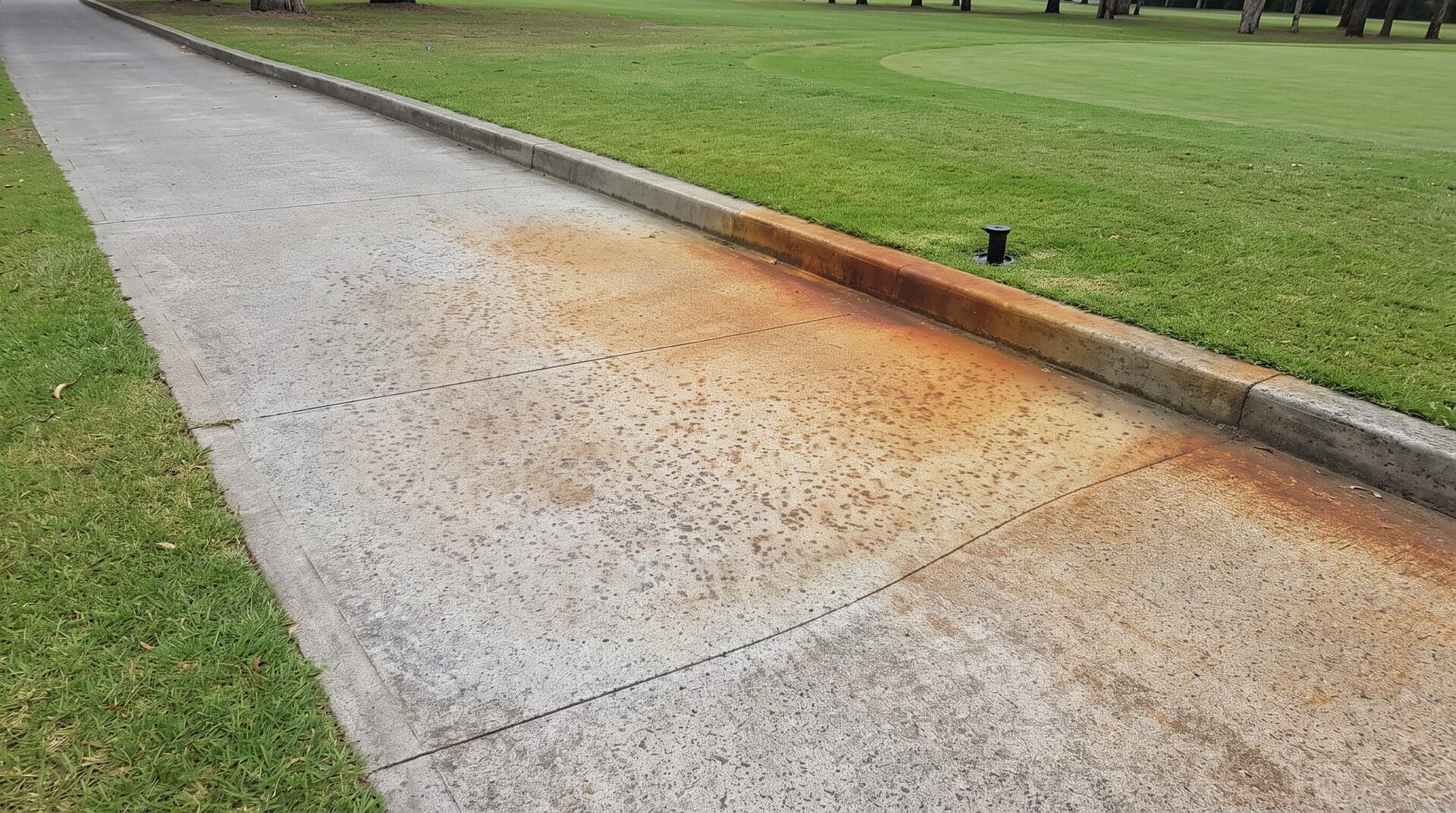
Bore water stains are the rust-coloured streaks and patches that build up on concrete, walls and playing surfaces wherever iron-rich groundwater is sprayed or splashed. On a golf course, a sports ground or a commercial site they are a visible sign that the water needs treatment, and they are rarely the only problem the water is causing.
This guide covers what causes the staining, what it does on commercial and turf sites, and how it is treated at the source.
What causes bore water stains
The cause is what is dissolved in the groundwater. Bores in the Hawkesbury sandstone and the Cumberland Plain alluvium commonly carry dissolved iron and manganese, along with elevated salinity and sodium, hardness, sediment and turbidity, and in places a low pH.
Iron and manganese are what leave the marks: rust-coloured staining on concrete, and black or brown deposits in tanks and pipework. The Sydney Basin's ironstone and sandstone aquifers are known for this kind of staining and discolouration, which is why bore water treatment systems for these bores so often start with iron and manganese removal.
Iron also feeds iron bacteria, which build a slime that blocks screens, filters and drip emitters. Staining on the surface and blockages in the system tend to come from the same water.
What the staining does on commercial and turf sites
None of these minerals make the water unusable. All of them decide what it can be used for, and what it will do to the surfaces and equipment it reaches.
Paths, buildings and playing surfaces
High iron and manganese stain paths, buildings and playing surfaces. On a course that means marked cart paths and clubhouse walls, which is why golf course irrigation water has to be treated so it will not stain paths and surfaces before it reaches the sprinklers.
Sprinklers, emitters and heat exchangers
The same metals progressively block emitters and sprinkler nozzles, and on commercial sites they foul heat exchange surfaces as well. For turf and horticulture, bore water irrigation is designed so the water will not damage turf, block emitters or corrode the existing reticulation.
Why it shows up in year three
None of this shows up in the first month. It shows up in year three, as declining infiltration, patchy surfaces and a reticulation system that needs replacing years earlier than it should have.
How bore water stains are treated at the source
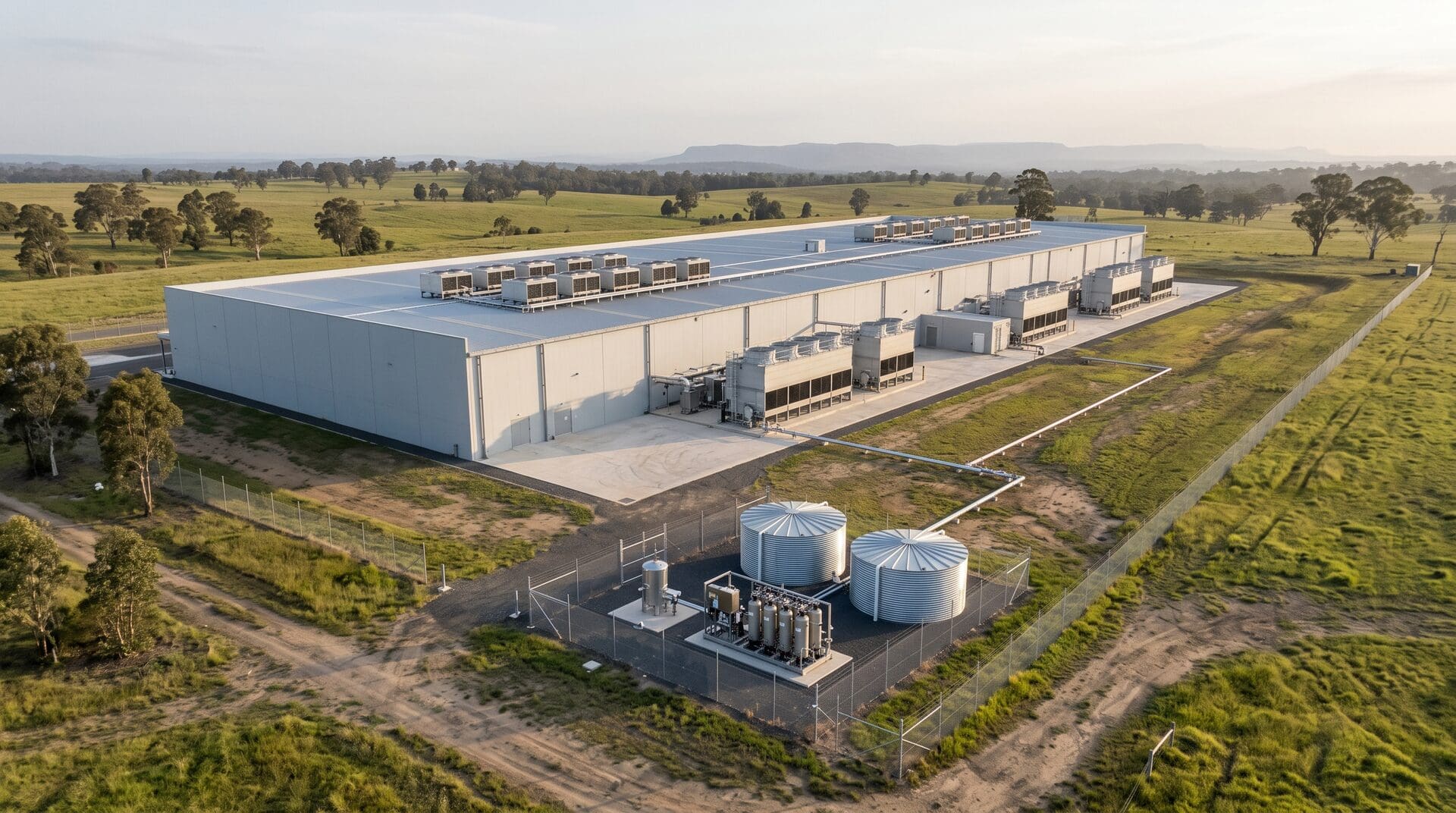
Staining is solved in the water, before it reaches the concrete. Treatment for iron and manganese uses oxidation and media filtration, built to the actual water analysis rather than a standard package.
It starts with a test. Raw water is sampled and analysed for iron, manganese, salinity, hardness, pH, turbidity and whatever else matters for the use. No design starts without the numbers.
The target is then set by the end use. Greens, fairways, sports turf and horticulture all have different quality tolerances, and cooling make-up, wash-down and process water have their own. The treatment train is sized to the site's flow and to the gap between raw and target water.
Once it is installed, the treated water is tested against the specification at commissioning and monitored against it from then on, with filter media and consumables managed. Where a site already has a licensed bore, treatment can be added as a stand-alone plant.
Household bores are a different job
Sydney Basin Water treats bore water at plant scale for commercial, industrial and irrigation sites. For stains from a household, stock or farm bore, see bore water filtration from our sister company BG Water Solutions.
If bore water is staining your course, sports ground or site, call us on 0408 915 449 or request a water test through our contact page.